Walk into almost any US riding school and you’ll be asked the same question: English or Western? Both are wonderful ways to ride, both teach you to control and communicate with a horse, and plenty of riders end up doing both. But they feel quite different in the saddle. Here’s a simple guide.
Where the two styles come from
Western riding grew out of the working cattle ranches of the American West (with roots in Spanish vaquero traditions). Cowboys spent long days in the saddle and needed a comfortable seat, a horse that could work on a loose rein, and one hand free for a rope.
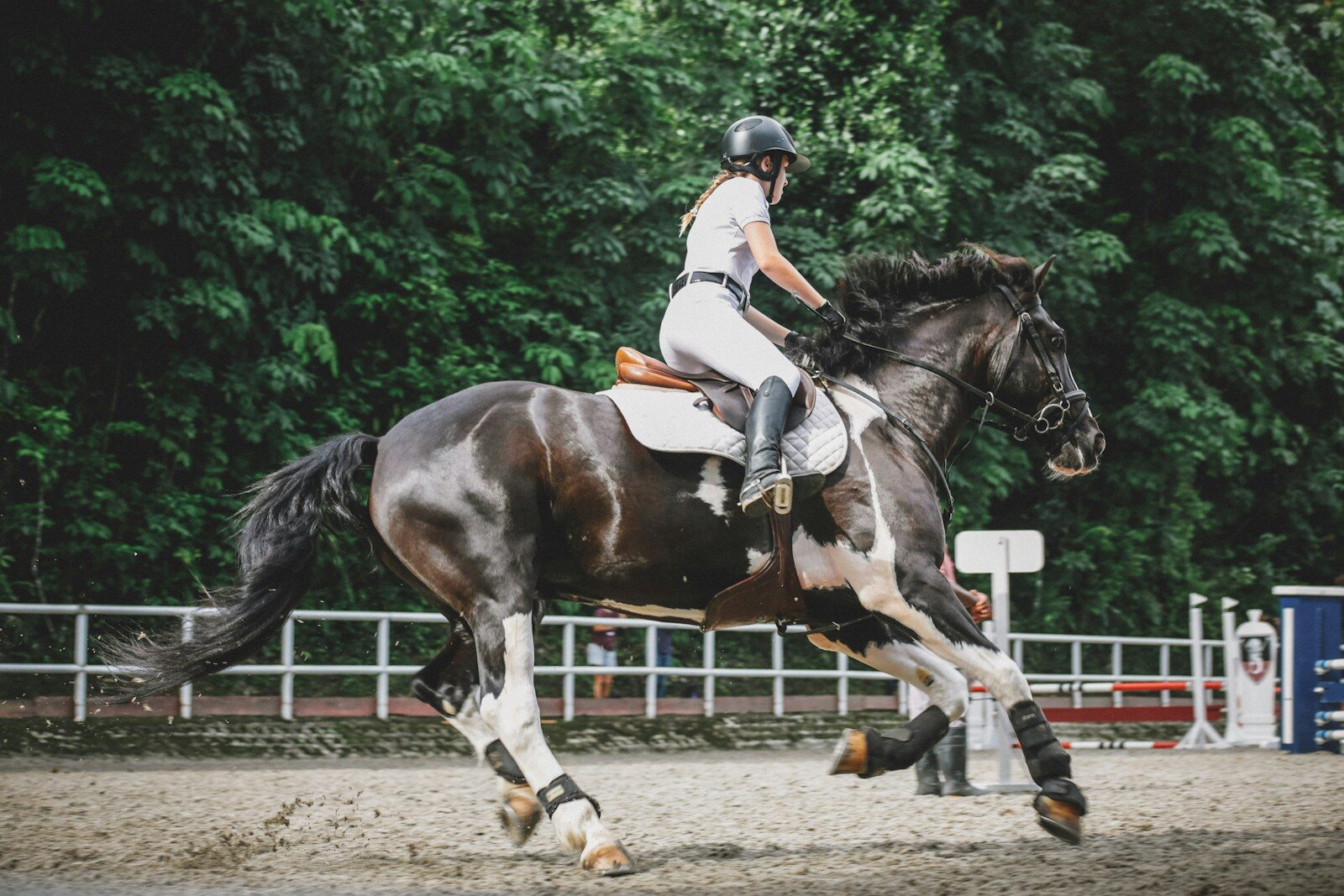
English riding developed from European cavalry and fox hunting traditions, where riders needed close contact with the horse for jumping and precise movement.
The key differences
| Western | English | |
|---|---|---|
| Saddle | Large, heavy, deep seat with a horn; weight spread over a bigger area | Small, light, flat; closer contact with the horse |
| Reins | Often held in one hand, loose rein; horse steered by neck reining | Held in both hands with light, steady contact on the bit |
| Position | Deep, relaxed seat; longer stirrups; sit the jog | Shorter stirrups; rise (“post”) to the trot |
| Gaits | Walk, jog, lope – slow and smooth | Walk, trot, canter, gallop – more forward |
| Clothing | Jeans, Western boots, cowboy hat for shows (helmet for lessons) | Breeches, paddock or tall boots, helmet |
| Popular disciplines | Trail, reining, barrel racing, cutting, ranch riding, Western pleasure | Dressage, show jumping, hunters, eventing, fox hunting |
Which is easier for beginners?
Many beginners feel more secure in a Western saddle straight away – the deep seat and horn feel reassuring, and the slower jog is easier to sit. That’s why most trail ride stables in the US use Western tack.
English can feel less stable at first because the saddle gives you less to hold onto, but it develops balance and an independent seat quickly, and it’s the route to jumping and dressage.
The truth is that a good instructor on a good school horse matters far more than the style of saddle.
How to choose
- Want to trail ride, work cattle, try barrels or ride ranch horses on vacation? Go Western.
- Dream of jumping, dressage or eventing? Go English.
- Just want to learn to ride well? Pick the best-run barn near you and learn whatever they teach. The core skills – balance, soft hands, clear aids and understanding horses – carry over.
- Got kids? Look at what local Pony Club, 4-H and youth show programs offer – that’s where the fun and friendships happen. See our guide to riding lessons for kids.
Can you switch later?
Absolutely. Switching takes some adjustment – shortening or lengthening stirrups, changing how you hold the reins, learning to post or sit the trot – but many riders find that learning both makes them better at each.
Regional differences in the US
You’ll find both styles everywhere, but Western riding dominates in states like Texas, Oklahoma, Wyoming, Montana and much of the West, while English disciplines are especially strong in Kentucky, Virginia, Maryland, the Northeast and Florida’s winter show circuits around Ocala and Wellington.
Find lessons near you
Search Horse Riding USA by state – for example Texas, Kentucky or Oklahoma – to compare riding schools near you. Before your first visit, read what to expect at your first riding lesson.